About Abha Forum
Endless place of thought … a shape and an idea of shape … I am the beginning and the end.
—Mahmoud Darwish, “Sand”
The relationship between landscape and the medium of film is an intricate interplay of visual aesthetics, narrative construction, and symbolic representation. Filmmakers have long recognized the potential of landscape to evoke emotion, establish atmosphere, and enhance storytelling. Through the careful selection and composition of natural or constructed environments, filmmakers harness the power of landscape to contribute to the narrative and thematic potential of film. The landscape serves as both a backdrop and an active participant in the visual language of cinema, shaping the mood, tone, and meaning of the narrative. By utilizing various cinematic techniques such as framing, lighting, and camera movement, filmmakers manipulate landscape to convey a range of emotions. Moreover, landscape often carries symbolic significance, representing larger social, cultural, or historical contexts in film—and, like film, landscape has the ability to record the passage of time.
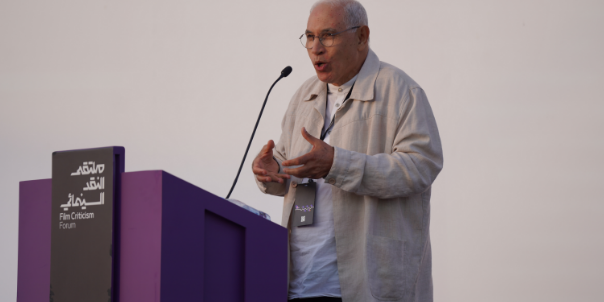
Landscape surrounds us; we are never outside of it. Asir Province is home to particularly cinematic terrain: majestic mountains, vast valleys, and lush forests, as well as sea and desert panoramas—the fundamental elements of land, sea, and sky. While we might take in the visual pleasure of landscape—it can be awe-inducing, wondrous, fantastical, overpowering—we are also constantly negotiating our relationship with the natural world. For this reason we must ask: How are we implicated in the landscape in which we reside and immerse ourselves, even when we don’t always notice it? The film screenings and presentations in this session of the Film Criticism Forum bring the background to the fore, exploring landscape as metaphor, as material, and as network of relations.
Program Summary
Workshop

Soundscape complementing landscape
By
Emile Aouad
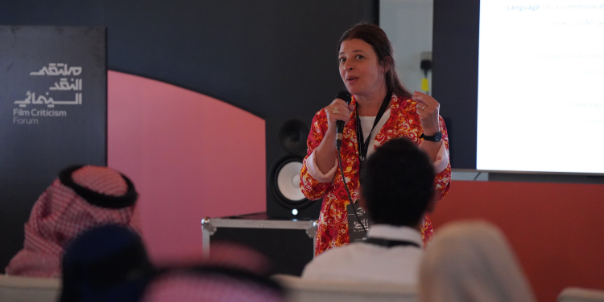
‘Places are not silent. Places are alive, and thus, they resonate with sound.’ This notion was the heart of the workshop while introducing various methods for harnessing the power of soundscape in filmmaking and its profound importance. Sound possesses the ability to evoke distinct thoughts and emotions within the viewer's psyche, capable of profoundly altering the perception of an entire scene. Our comprehension of sound transcends language barriers. When you listen to a song in an unfamiliar language yet immerse yourself in the music and its sentiments, you can still grasp its essence to some extent. Attentive listening to all sounds, including echoes, provides insights and information about the environment, from its location to its surroundings, further enriching the intellectual and emotional facets of the viewing experience. The realm of cinematic soundscape design delves into a deeper world. Throughout the filmmaking process, a complex array of equations within the language of sound is at our disposal, shaping soundscapes we can weave.
presentation

History and Memory in Filmic Landscapes
By
Samirah Alkassim
يستنبط هذا العرض بعض السمات الفنية والجمالية الخاصة بسينما المهاجرين من خلال استعراض نماذج فيلمية عربية وأفريقية عالجت موضوع الهجرة، لا سيّما الهجرة السرية. ويناقش الطريقة التي تلتقط بها عين المخرج وكاميرته في هذا النوع من الأفلام تفاصيل الألم والرغبة في البوح بعد أن تضيق الحياة بالإنسان في موطنه فيبحث عن أفق آخر يمثل بالنسبة إليه حلمه المفقود. كما يوضح استثمار المخرج السينمائي للمكونات السينمائية، من زمان ومكان وشخصيات ورؤية فنية، ليكشف من خلالها عن العوالم الداخلية لشخصية المهاجر الذي يتمزق واقعه بين عالمين متجاورين. وبهذا يفحص العرض المادة الفيلمية الإنسانية ويفكّكها من زوايا نقدية عديدة من أجل دراسة مكوناتها واستنطاق مفاهيم نقدية وفلسفية وجمالية لا غنى عن تناولها في أي نقاش يدور حول هذا النوع من التعبير السينمائي.

Elucidating the Desert as Cinematic Field
By
Hammadi Gueroum
A natural landscape carries a myriad of meanings within it. The film "The Dupes" (1972) portrays this by directing the passage of its three main characters (young Palestinians) from the desert to water on their way to Kuwait, portraying their self-rescue. The vast desert holds various meanings and concepts within the film – its haunting darkness, rugged terrains, the interplay of light, and the gloominess of sandstorms evoke different emotions within the viewer, depicting a painting of a spiritual reverie in some scenes and a maze in others. Dr. Hammadi Gueroum spoke about " Elucidating the Desert as Cinematic Field," where he posed a thought-provoking query, inviting participants to delve into their own cinematic critique: "What truly defines cinematic criticism? Is it a reflection of ethical and behavioral insights? Or does it delve into the realm of analytical exploration?"

From Perceived Cinematic Space to the Space of Hallucination and Fantasies
By
Ahmed Gasmi
‘How can we make a flat-screen television encompass the vast universe with its multiple dimensions?’ Dr. Ahmed Algasmi used this question as the foundation for his talk, delving into how elements possess various meanings and how they can impact human emotions, the context, and the environment of a film. Scenes featuring icebergs, for example, may symbolize the periods of stagnation humans experience at certain stages of life. In contrast, scenes featuring a snow-covered landscape could depict a promising beginning. The presence of natural landscape elements in films, including hills, rivers, and mountains, goes beyond mere aesthetics. These elements hold power to deeply impact the interpretation and scrutiny of a film while also assuming a crucial role in molding the trajectory of the narrative, either propelling or hindering its cinematic intent. The presentation delved into a subject that bridges art, philosophy, and psychology, shedding light utilizing of natural landscape elements to convey profound meanings and human contemplations pertaining to life and the human experience.
Panel Discussion

Panel Discussion
Speaker
Samirah Alkassim Hammadi Gueroum, Ahmed Algasmi Moderated by Ali Almajnooni
Screening

Theeb (2014)
Dir
Naji Abu Nowar
In the Arabian Peninsula, 1916, under British occupation, in a Bedouin camp in the heart of the desert, the young Theeb, ten years old, lives with his older brother Hussein, who transmits ancestral traditions to him. One night, a British officer arrives seeking assistance in crossing the desert. Hussein agrees to guide him in this perilous journey in search of a well. Theeb, who refuses to leave his brother, decides to follow them from a distance.


Media Gallery




















In collaboration with